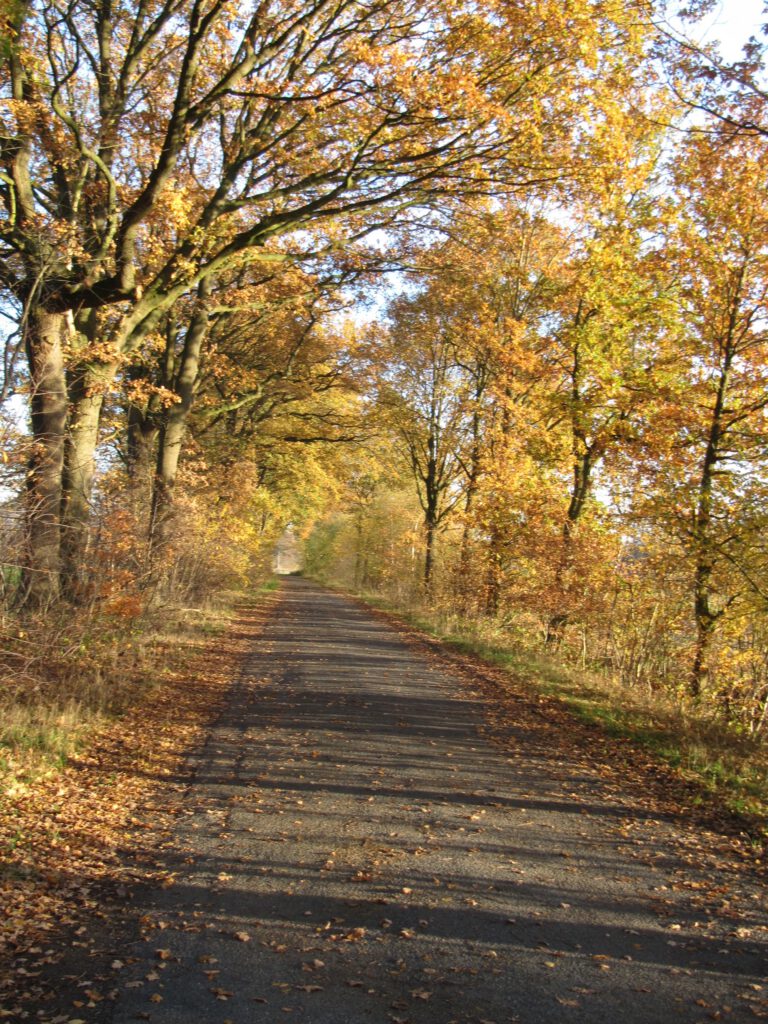
Autumn colors of the leaves
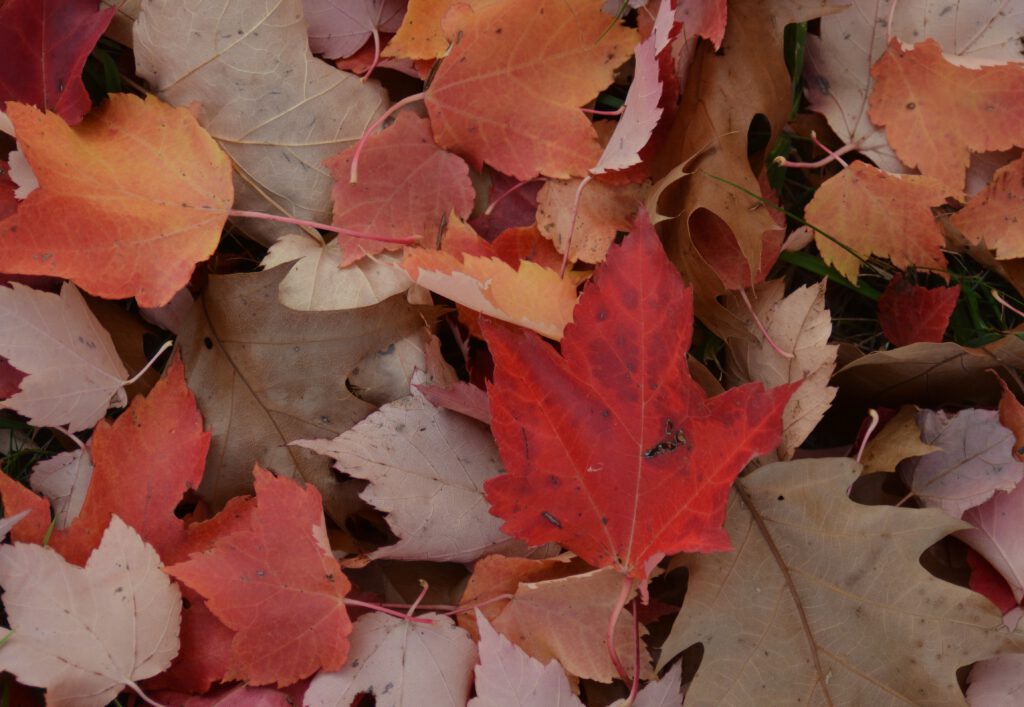
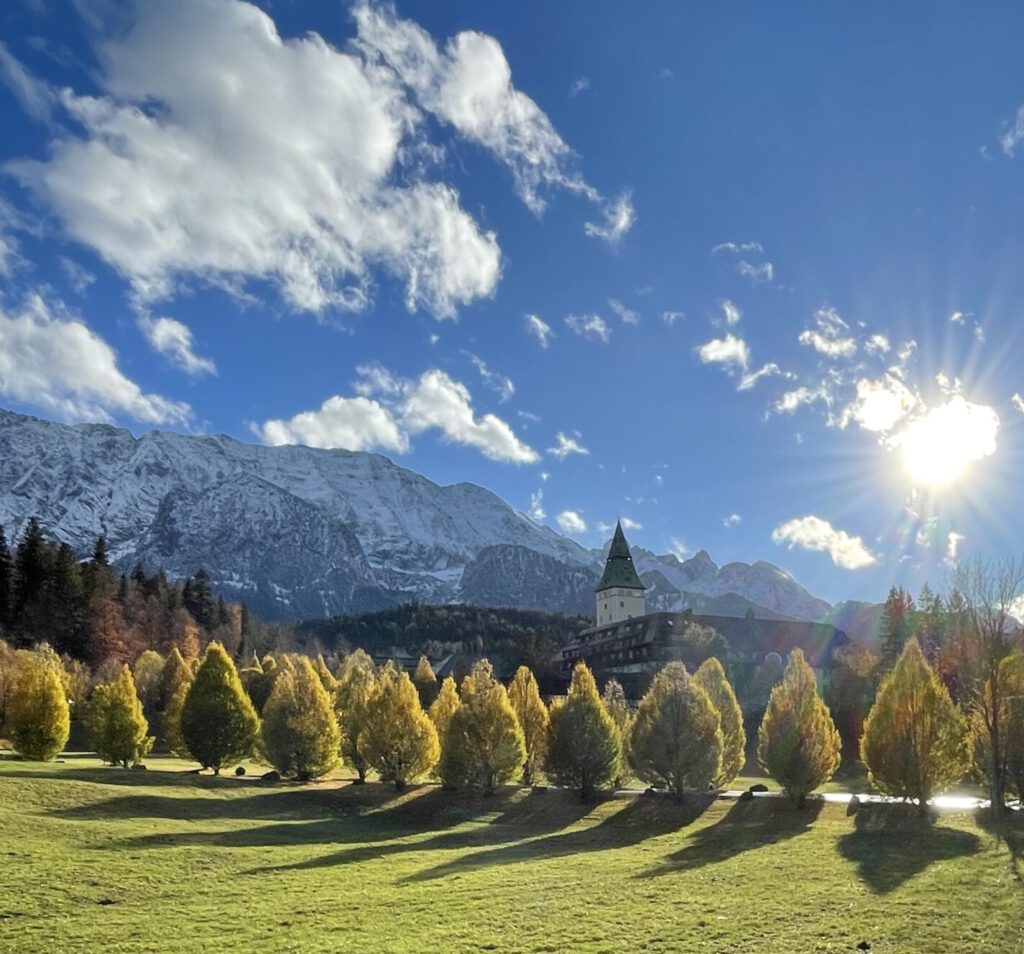
This year, the autumn foliage is changing color unusually early. At least, that's how it seems to me, and the colors are also more intense than in other years.
The summer was neither exceptionally hot nor dry. It couldn't really have been due to the weather.
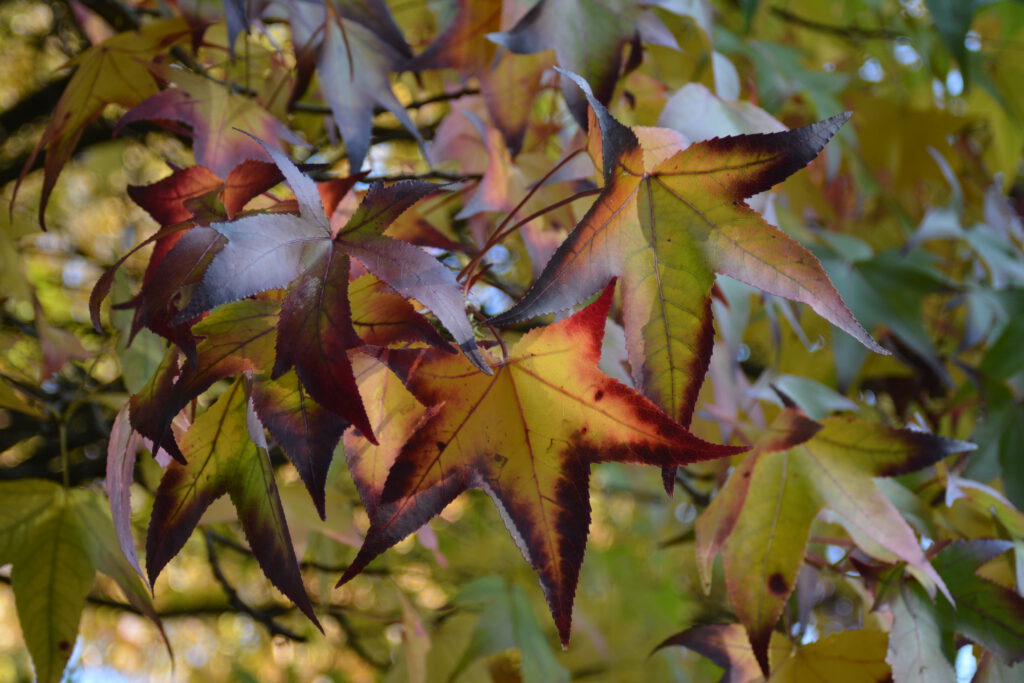
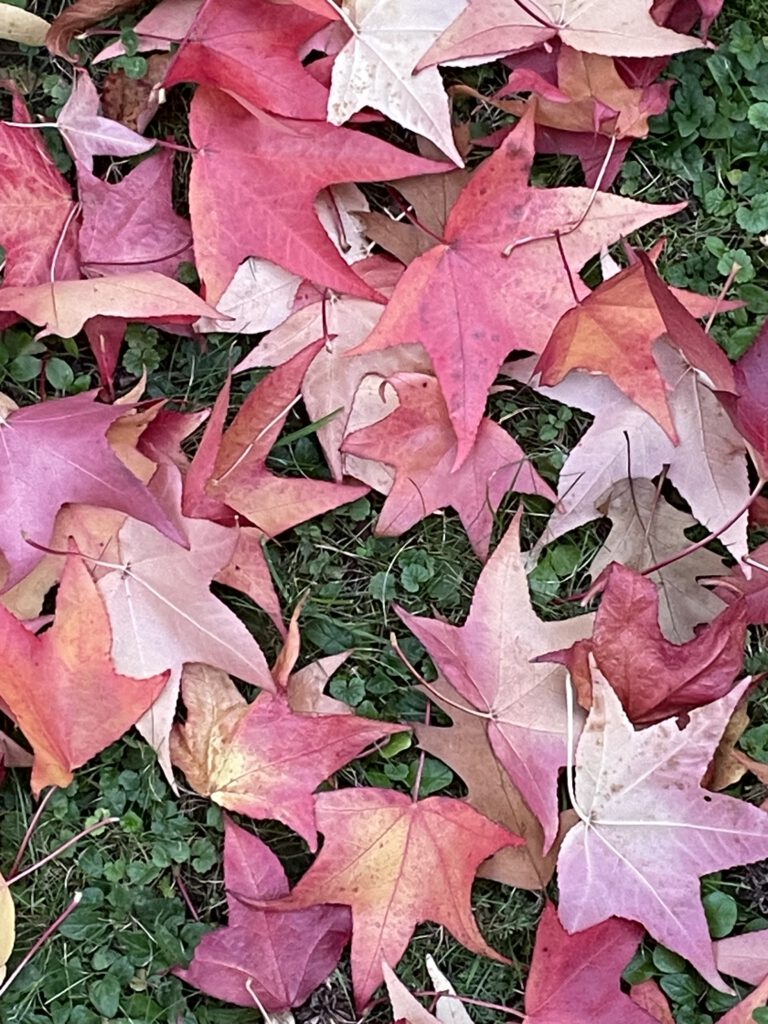
The late summer sun was still shining when the first sweetgum trees (Liquidambar styraciflua) glowed a fiery red. From a distance, they looked like burning torches.
„Autumn leaves of red and gold“
Nat King Cole (1919-1965) sang about the colors of Indian Summer. These colors are nowhere to be found in Central European forests. When the leaves of trees or shrubs turn intensely red here, it is usually due to species introduced from North America or Asia. They are found in parks and gardens. The North American sweetgum, in particular, is being planted more and more frequently in cities.
Although it is now an introduced species, it was once native to Europe. This was around 30 million years ago during the Tertiary period, which was brought to an end by the Ice Ages.
Ice ages wiped out the European populations of the sweetgum tree.
The ice sheets buried the rich Tertiary flora, leading to the floristic impoverishment of Central Europe that is still noticeable today.
Only fossils still attest to how widespread the genus Liquidambar once was in Europe during the Tertiary period. Several species, including L. lievenii and L. europaea, are known from fossils found in the Garzweiler open-cast lignite mine.
Of the once globally spanning, closed ranges of the genus Liquidambar in the Tertiary period, only widely separated (so-called disjunct) remnant ranges have remained since the Ice Ages. The Asian sweetgum (L. formosana) grows in the forests of Guangdong in China, and the American sweetgum, or starfish tree (L. styraciflua), in the forests of North America.
In between, the Oriental Sweetgum (L. orientalis) can only claim tiny occurrences on Rhodes and on the Turkish coast.
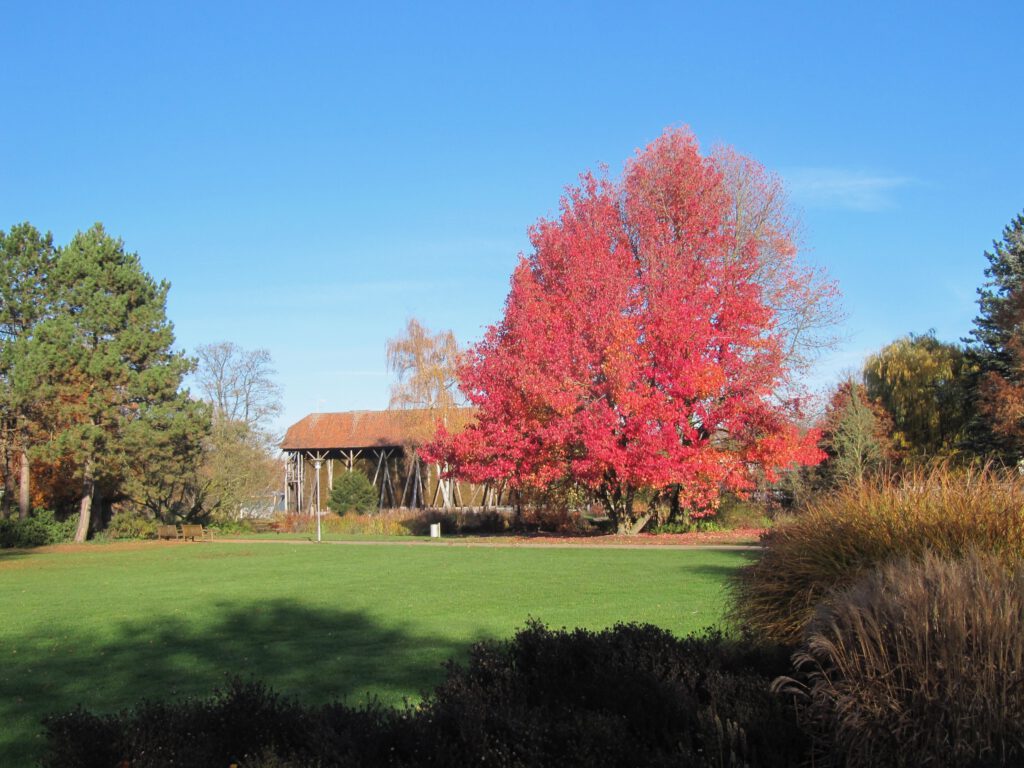
The visual appeal of the fiery red doesn't quite fit the melancholic mood of "Autumn Leaves." This mood usually only grips Europe in late autumn, when it actually becomes wet and cold, and when the leaves of most of the native trees fall.
The amber trees have long since stood bare.
Why do leaves change color before they fall?
With the autumnal change in leaf color, the tree replenishes reserves that would otherwise be lost when the leaves fall. The breakdown of green chlorophyll makes the otherwise hidden yellow pigments (carotenoids and xanthophylls) visible. The leaves of most trees turn yellow before they finally dry out and fall from the tree, turning brown.
The intense red coloration of the sweetgum tree is caused by anthocyanins, which are synthesized specifically for this short period. This effort is apparently undertaken to protect metabolic processes from UV radiation, processes that continue even in the dying leaves.
„Les Feuilles mortes” become “Autumn leaves”
Joseph Kosma (1905-69), originally from Hungary, composed the music for "Autumn Leaves" while living in France in 1945. Jacques Prévertin wrote the French lyrics for "Les Feuilles mortes." However, it was Nat King Cole who made the English lyrics to "Autumn Leaves" world-famous. The gifted lyricist Johnny Mercer wrote them in 1950.